Tree Trimming and Removal on Rocky Hill Country Slopes: Safety, Access, and Equipment Considerations
Practical guidance for homeowners and land managers on the special safety, access, equipment, and site‑preparation issues involved in trimming or removing trees on steep, rocky Hill Country slopes, and how Texas Ranch Construction can help.

Why steep, rocky slopes require a different approach
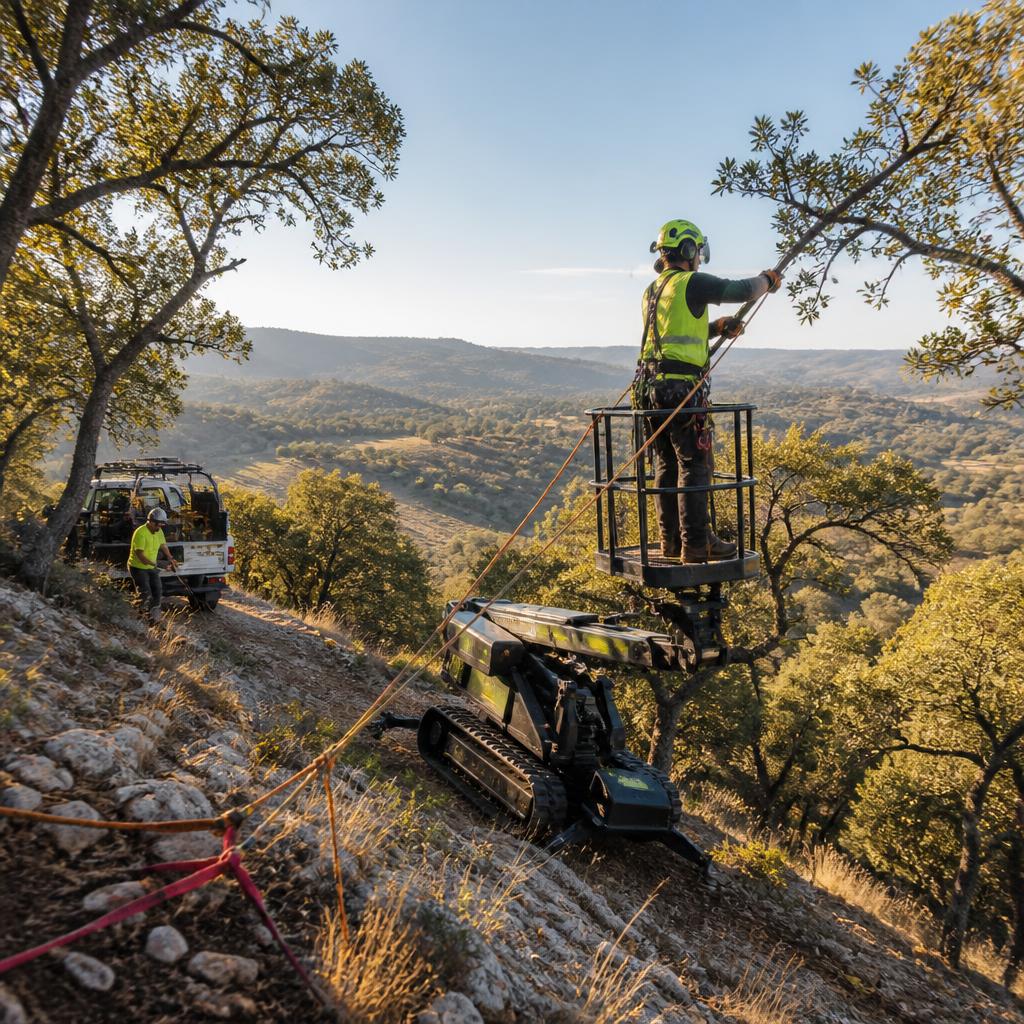
The Texas Hill Country’s rocky slopes pose distinct challenges for tree trimming and removal compared with flat or loamy sites. Thin soils, exposed limestone, steep grades, and native cedar and mesquite growth make conventional techniques less effective and increase risks to workers, equipment, and adjacent property. On slopes you have to think beyond simply cutting a tree: root stability, rockfall, erosion, and the difficulty of moving heavy machinery all influence which methods are safe and practical.
Site assessment and safety first
A thorough site assessment is the first step. Professionals evaluate slope angle, soil depth, rock concentration, tree lean, proximity to structures or utilities, and potential escape routes for falling limbs or whole trees. Safety measures commonly used on steep terrain include rigging (to control fall direction), certified fall‑protection for crews, use of winches or cranes when appropriate, and restricting work during adverse weather. Trees with compromised roots or crowns can behave unpredictably on slopes, so conservative decisions about rigging and staged removals are common.
Access, staging, and protecting the property
Access planning is critical on rocky slopes. Staging areas for equipment should be located on the most stable ground available, and temporary access roads or mats may be required to prevent excessive ground disturbance. Protecting existing fences, water features, and native vegetation is part of responsible site management; fence line clearing and careful staging can preserve property assets while creating safe access for crews. When roads or bridges are not feasible, crews may bring in smaller specialized machines that minimize ground impact.
Equipment and methods suited for rocky Hill Country terrain
Certain equipment and techniques are better suited to rocky slopes. Forestry mulching safely grinds brush, cedar, and smaller trees in place while returning organic material to the soil—reducing hauling needs and stabilizing exposed ground. For larger trees, controlled rigging and sectional dismantling are often used to lower limbs and trunks in pieces rather than felling whole trees downhill. Rock milling and rock grinding can improve surface usability where limestone fragments impede access or grading. Texas Ranch Construction’s services list includes forestry mulching, rock milling, rock grinding, tree removal, and chipping—options that are commonly applied together to manage slope conditions efficiently.
Erosion, drainage, and post‑work stabilization
Removing trees or heavy mulching on a slope can change how water moves across the property. Proper erosion control and drainage planning help prevent gullies and downstream sedimentation. Best practices include leaving buffer strips of vegetation where possible, using mulch or chipped material to protect exposed soil, and installing temporary erosion controls such as wattles, silt fences, or rock check dams until vegetation reestablishes. For larger earthwork (grading or access roads), coordinating with experienced contractors ensures drainage is maintained and long‑term stability is considered.
How homeowners can prepare before crews arrive
You can make the job safer and faster by taking a few preparatory steps: clear gates and establish a driveable access point if possible, move vehicles and trailers away from the work zone, secure pets and livestock, and mark any underground or overhead utilities. Identify trees of particular concern and point out fences, water lines, and sensitive habitat so crews can plan protection measures. Permits and local regulations can apply—contact your local county or municipality to confirm whether any permits or signoffs are needed before work begins.
Working with Texas Ranch Construction: what to expect and how to reach us
Texas Ranch Construction brings more than 20 years of Hill Country experience to steep slope projects, offering services such as tree trimming and removal, forestry mulching, cedar clearing, rock milling/crushing, chipping, fence line clearing, and erosion‑aware site work. Our crews assess each slope, recommend safe methods (rigging, sectional removal, mulching), and coordinate necessary erosion controls and site stabilization. We serve Kerrville and communities across the Texas Hill Country, including Fredericksburg, Boerne, Llano, Center Point, Harper, Medina, Bandera, Comfort, Sisterdale, Stonewall, and Johnson City. For an assessment or to discuss a specific slope, contact Texas Ranch Construction directly at (830) 431-8952 or visit https://www.texasranchconstruction.com to request more information.
Article by
Texas Ranch Construction
Texas Ranch Construction is your premier choice for expert land clearing services in Kerrville and the Texas Hill Country. Whether you need land clearing, cedar mulching, forestry mulching, brush removal, rock milling & rock crushing, or pond and lake construction, we’ve got you covered! With over 20 years of experience, we have established ourselves as a trusted leader in the industry. Our commitment to delivering top-quality results has made us the best choice for clients in Kerrville, Fredericksburg, Comfort, Sisterdale, Stonewall, Center Point, Harper, Llano, Boerne, Medina, Bandera, and Johnson City.