Mesquite and Cedar Clearing for Better Grazing: Improving Pasture Productivity in the Hill Country
Practical guidance for livestock and pasture owners on how targeted mesquite and cedar clearing improves grass growth, water availability, and cattle movement, with Hill Country considerations and how Texas Ranch Construction can help.

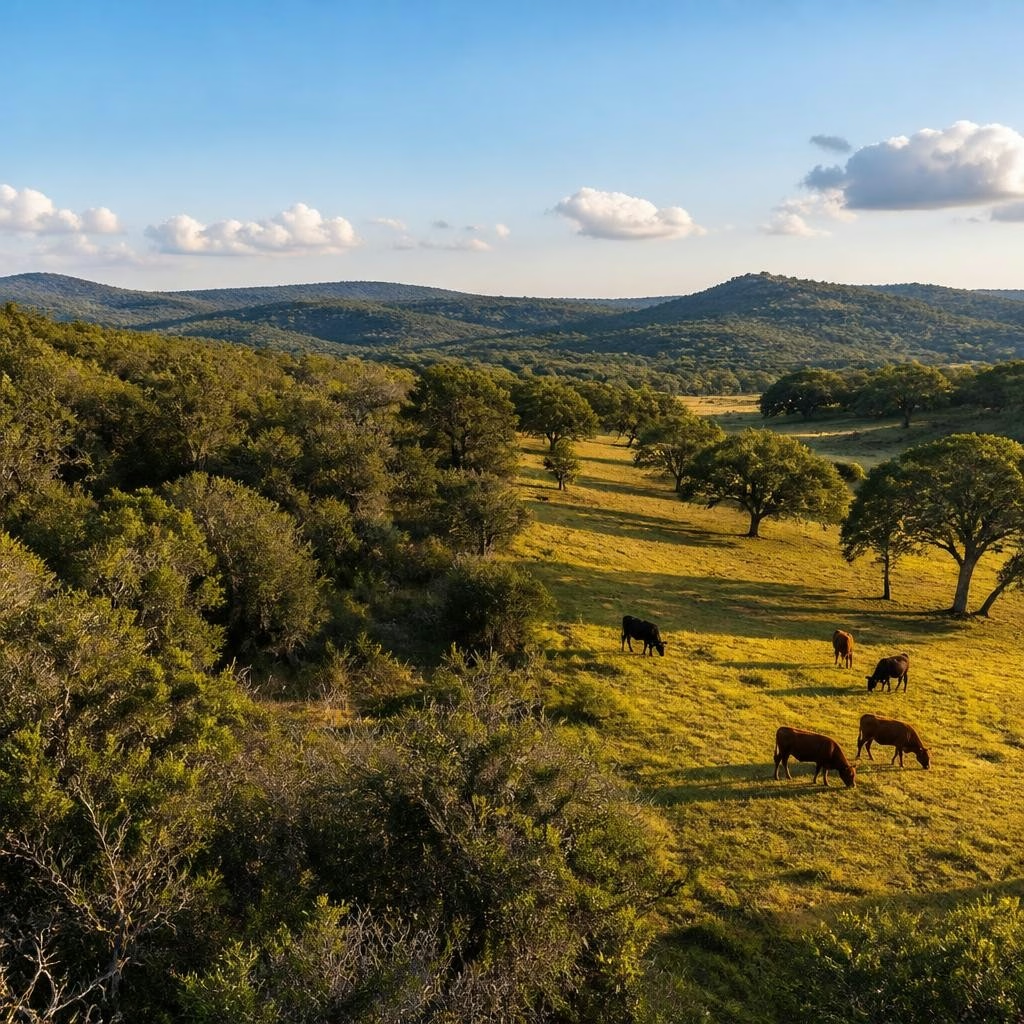
Why mesquite and cedar matter for Hill Country pastures
In the Texas Hill Country, invasive cedar and proliferating mesquite frequently change the character of rangeland. These woody species compete with grasses for water and nutrients, reduce sunlight reaching desirable forage, and can fragment pasture continuity. For livestock owners, that means lower usable forage, restricted animal movement, and sometimes reduced water infiltration into soils and ponds. Understanding the specific effects of cedar and mesquite is the first step toward making targeted management decisions that restore pasture productivity.
How cedar and mesquite reduce grazing productivity
Both eastern redcedar (commonly called cedar in Texas) and mesquite establish dense stands that outcompete native grasses. They transpire significant amounts of water, which can lower soil moisture available to grasses during dry spells. Dense brush also creates shaded microclimates where grass growth slows, and thickets interfere with stock rotation, fence access, and animal movement. In addition, unmanaged cedar and mesquite increase fuel loads that raise wildfire risk and complicate emergency ranch operations.
Benefits of targeted clearing for livestock owners
Targeted removal of mesquite and cedar can produce measurable improvements in pasture utility: more sunlight and soil moisture for grasses, easier access for livestock and equipment, and improved grazing distribution across the property. Clearing strategic corridors and fence lines enhances stock handling and reduces maintenance costs. When combined with follow-up grazing or pasture-rest practices, clearing helps existing forage recover and supports reseeding or overseeding where desired.
Practical clearing methods appropriate for Hill Country ranches
There are multiple techniques for managing cedar and mesquite depending on density, terrain, and landowner objectives. Forestry mulching and cedar mulching are efficient options that shred trees and brush in place, returning organic matter to the soil without hauling large piles offsite. Selective tree removal and brush clearing can open corridors while leaving desirable trees intact. Rock milling or rock grinding may be used on rocky areas to improve ground usability where machinery is required. Texas Ranch Construction lists these services and applies machinery choices to match site conditions, aiming to clear invasive species while preserving topsoil and native vegetation where possible.
Before-and-after scenarios common to Bandera and Llano counties
Many ranches in Bandera and Llano counties face similar patterns: cedar encroachment on former grasslands, mesquite thickets replacing open pasture, and fence-line overgrowth that complicates stock movement. A typical outcome after targeted clearing is visibly increased grass cover in formerly shaded areas, improved access to feeders and watering points, and restored visibility along fences and roads. While every property is different, landowners in these counties often report better pasture use and easier day-to-day management after a planned clearing program.
Planning, timing, and follow-up management
Effective results require planning. Consider clearing in phases to manage erosion risk and to allow forage regrowth; avoid clearing steep slopes without erosion controls. Protect desirable trees and riparian areas, and incorporate measures such as mulching or chipping to retain organic matter. Follow-up practices — controlled grazing, strategic reseeding, or brush monitoring — are important to prevent rapid regrowth of unwanted species. Landowners should also check local regulations or permit requirements before large-scale work and consult with experienced contractors to ensure best practices are followed.
How Texas Ranch Construction can help you get started
Texas Ranch Construction provides mesquite and cedar clearing, cedar mulching, forestry mulching, brush clearing, and related services tailored to Hill Country ranches. With more than 20 years of experience working throughout Kerrville and surrounding areas, including Bandera and Llano counties, the company offers on-site evaluations to develop a phased, practical clearing plan that balances pasture recovery with soil and habitat considerations. To discuss a property assessment or request a site visit, contact Texas Ranch Construction directly at (830) 431-8952 or visit https://www.texasranchconstruction.com for more information.
Article by
Texas Ranch Construction
Texas Ranch Construction is your premier choice for expert land clearing services in Kerrville and the Texas Hill Country. Whether you need land clearing, cedar mulching, forestry mulching, brush removal, rock milling & rock crushing, or pond and lake construction, we’ve got you covered! With over 20 years of experience, we have established ourselves as a trusted leader in the industry. Our commitment to delivering top-quality results has made us the best choice for clients in Kerrville, Fredericksburg, Comfort, Sisterdale, Stonewall, Center Point, Harper, Llano, Boerne, Medina, Bandera, and Johnson City.