Lake and Large Pond Construction in the Hill Country: From First Site Visit to Full Pool
A practical walkthrough of building private lakes and large ponds in rocky Hill Country terrain near Kerrville, Harper, and Center Point — covering site assessment, dam and shoreline planning, rock handling, erosion control, timelines, and how to begin with Texas Ranch Construction.

Why a Hill Country Lake Needs a Specialized Approach
Building a private lake or large pond in the Texas Hill Country requires methods that account for rocky limestone, steep contours, native vegetation, and unpredictable rainfall patterns. Texas Ranch Construction brings focused land- and water-management experience to projects across Kerrville, Harper, Center Point and surrounding communities. This article explains the practical steps you can expect from initial visit through to a full pool, and how the right planning reduces long‑term maintenance and erosion risks. For project inquiries, contact Texas Ranch Construction at (830) 431-8952 or visit https://www.texasranchconstruction.com.
First Site Visit: What We Inspect and Why It Matters
The initial site visit documents access, property grading, existing drainage, soils and the presence of surface rock outcrops. A technician will evaluate the watershed that will feed the pond or lake, note existing springs or seeps, and identify utilities or fences that affect layout. Vegetation and cedar density are recorded because clearing approach and mulching strategy influence how soils settle and how quickly native grasses reestablish along the shoreline. This assessment determines feasible reservoir locations, expected excavation depth, and whether specialized rock work will be needed.
Design Basics: Dam Footprint, Spillway, and Seepage Control
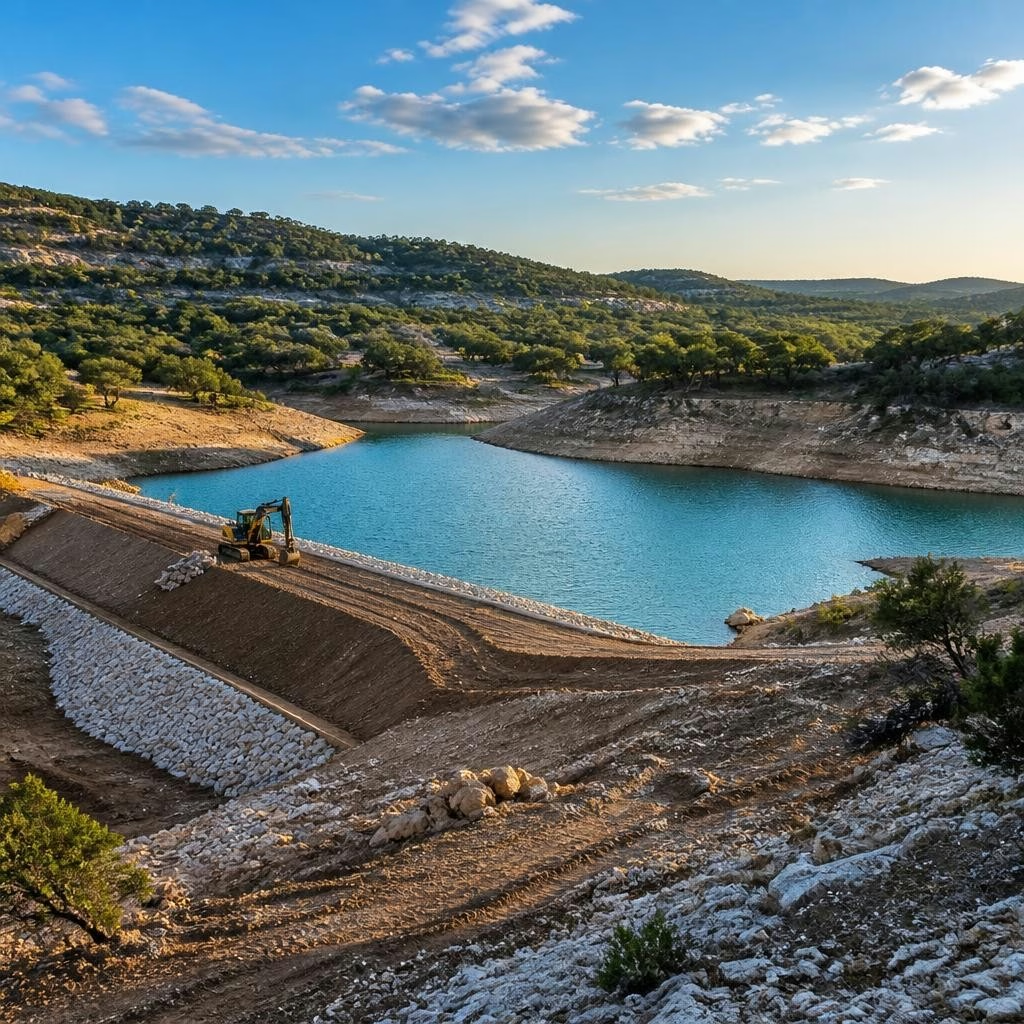
A sound design balances storage needs with safety and longevity. Key design elements include a carefully located dam footprint, a properly sized spillway to pass overflow without eroding the embankment, and attention to seepage paths through foundations or under the dam. Material selection and compaction strategy for the dam core are tailored to site conditions; whenever possible, on‑site materials are used to reduce trucking. Shoreline slope and benching are planned to minimize wave action and allow establishment of native vegetation. Texas Ranch Construction coordinates design details with landowners and local regulators to align the plan with site realities and permitting needs.
Excavation and Working with Rocky Limestone
Rocky Hill Country terrain often requires specialized excavation techniques. Where limestone or surface rock is present, rock milling, rock grinding and rock crushing can break down material so it can be reused for levees, riprap, road surfaces, or to dress dam slopes rather than hauling it offsite. These approaches reduce disposal costs and create useful aggregate for on‑site stabilization. Excavation also creates the reservoir basin and shapes any inlet channels; managing cut-and-fill to protect the dam foundation and preserve natural drainage is essential throughout this phase.
Shoreline Shaping and Erosion Control
Proper shoreline shaping reduces long‑term erosion and supports habitat and grazing use. Techniques include gradual benches or tapering slopes at the water’s edge, installing rock riprap in high‑energy zones, and preserving or reestablishing native grasses and forbs to stabilize soil. Mulching — including cedar mulching and forestry mulching where appropriate — can help protect exposed soils during establishment while returning organic material to the site. Where necessary, strategically placed brush clearing and fence-line work improve access without compromising bank stability.
Realistic Timelines and Seasonal Considerations
Timelines for a Hill Country lake vary with project scale, permitting, and weather. The initial assessment and design phase is typically completed before major earthwork begins; permitting timelines depend on local authorities and environmental reviews. Construction of small ponds can move relatively quickly once approvals are in place, while larger lakes and complex dam builds require more extended scheduling and staging. Weather and seasonal rainfall play a major role in filling schedules — natural fill may take time, and projects planned to coincide with drier windows reduce the risk of construction delays.
Next Steps: Getting Started with Texas Ranch Construction
If you’re considering a pond or private lake on Hill Country acreage, start with a site visit to understand opportunities and constraints. Texas Ranch Construction serves Kerrville, Fredericksburg, Boerne, Llano, and nearby Hill Country communities and can discuss land clearing, rock milling and crushing, shoreline shaping, dam earthwork and ongoing maintenance considerations. Reach out to schedule an initial consultation at (830) 431-8952 or visit https://www.texasranchconstruction.com to share project photos and property details and begin a site-specific plan.
Article by
Texas Ranch Construction
Texas Ranch Construction is your premier choice for expert land clearing services in Kerrville and the Texas Hill Country. Whether you need land clearing, cedar mulching, forestry mulching, brush removal, rock milling & rock crushing, or pond and lake construction, we’ve got you covered! With over 20 years of experience, we have established ourselves as a trusted leader in the industry. Our commitment to delivering top-quality results has made us the best choice for clients in Kerrville, Fredericksburg, Comfort, Sisterdale, Stonewall, Center Point, Harper, Llano, Boerne, Medina, Bandera, and Johnson City.