Forest Thinning Plans for Healthier Live Oaks and Native Grasses in the Hill Country
A practical guide for ranch and recreational property owners on how to create a basic thinning plan that relieves crowding around live oaks, increases sunlight to the understory, and supports native grass recovery — with guidance on when to contact Texas Ranch Construction.

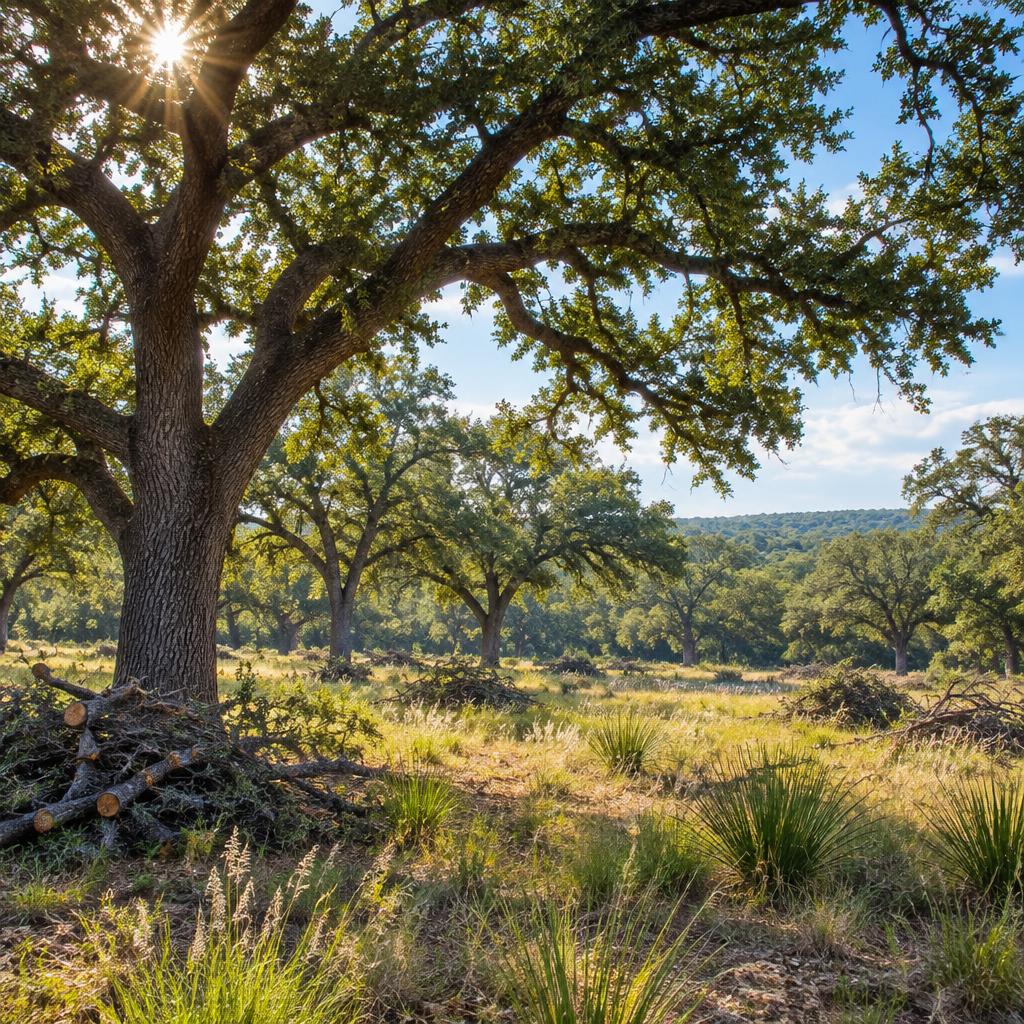
Why thinning matters for live oaks and native grasses
In the Hill Country, live oaks are a defining feature of many ranches and recreational properties, but overcrowding from cedars, mesquite, and dense understory can suppress native grasses and stress mature oaks. Forest thinning reduces competition for water and light, lowers ladder fuels that spread wildfire, and helps sunlight reach the understory so grasses and forbs can recover. Done correctly, thinning improves long‑term tree health and the ecological balance of pasture and woodland areas.
Assessing your property and clarifying objectives
Begin with a site assessment and clear objectives: do you want to prioritize pasture recovery, improve wildlife habitat, reduce wildfire risk, or protect specific specimen live oaks? Walk the property to note areas of heavy cedar or mesquite encroachment, steep slopes, fence lines, and drainage features. Identify live oaks and other trees you want to preserve, and mark dense patches of invasive species for removal. A thoughtful objective list keeps thinning targeted and prevents over‑clearing.
Elements of a basic thinning plan
A straightforward thinning plan includes: (1) protecting selected live oaks and desirable native trees, (2) removing competing understory and invasive trees near those specimens, (3) opening the canopy just enough to increase dappled light to the ground while preserving shade and root protection, and (4) staging work across seasons or areas to limit soil disturbance. Prioritize removing ladder fuels and dense thickets that connect the understory to the canopy, and consider leaving scattered shrubs or brush clumps to maintain habitat continuity.
Methods that support recovery and soil health
Choose methods that return organic material to the site and minimize hauling or burning when possible. Forestry mulching and cedar mulching are effective approaches in the Hill Country because they grind vegetation in place and return nutrients to the soil while preserving topsoil. Chipping services can convert removed limbs into mulch for erosion control or landscaping. Selective tree trimming and careful removal of hazardous trees complement mulching to protect desired live oaks.
Timing, permits, and environmental considerations
Account for local regulations, watercourse setbacks, and wildlife concerns before work begins. Avoid unnecessary soil disturbance on steep slopes and take steps to limit erosion after thinning. Where applicable, consult county or municipal authorities about permits or restrictions. Staging work—clearing one section at a time—reduces visual impact and gives native grasses an opportunity to recover between operations.
Aftercare to encourage native grass recovery
After thinning, protect the soil and support native grasses by retaining mulch where possible, avoiding heavy equipment traffic on recovering areas, and monitoring for re‑sprouting invasive species. Methods that recycle cut material into mulch help conserve moisture and add organic matter to the soil, which benefits native forbs and grasses. Plan for periodic follow‑up visits to manage regrowth and ensure the thinning objectives continue to be met over time.
How Texas Ranch Construction can help you implement a plan
Texas Ranch Construction, with more than 20 years of experience serving the Texas Hill Country, offers services that align with responsible thinning plans, including Forest Thinning, Forestry Mulching, Cedar Mulching, Brush Clearing, Chipping Services, Tree Trimming, and Fence Line Clearing. We work with property owners in Kerrville and surrounding communities across the Hill Country to assess sites, recommend staged thinning approaches, and execute work that protects specimen live oaks while promoting native grass recovery. For a site assessment and practical recommendations, contact Texas Ranch Construction directly at (830) 431-8952 or visit https://www.texasranchconstruction.com.
Article by
Texas Ranch Construction
Texas Ranch Construction is your premier choice for expert land clearing services in Kerrville and the Texas Hill Country. Whether you need land clearing, cedar mulching, forestry mulching, brush removal, rock milling & rock crushing, or pond and lake construction, we’ve got you covered! With over 20 years of experience, we have established ourselves as a trusted leader in the industry. Our commitment to delivering top-quality results has made us the best choice for clients in Kerrville, Fredericksburg, Comfort, Sisterdale, Stonewall, Center Point, Harper, Llano, Boerne, Medina, Bandera, and Johnson City.