Fence Line Clearing for New and Existing Fences: Safely Opening Overgrown Boundaries
A practical guide to professional fence line clearing on ranch and rural residential properties in the Texas Hill Country, covering assessment, common methods for cedar- and mesquite-heavy areas, safety considerations, and how Texas Ranch Construction can help.

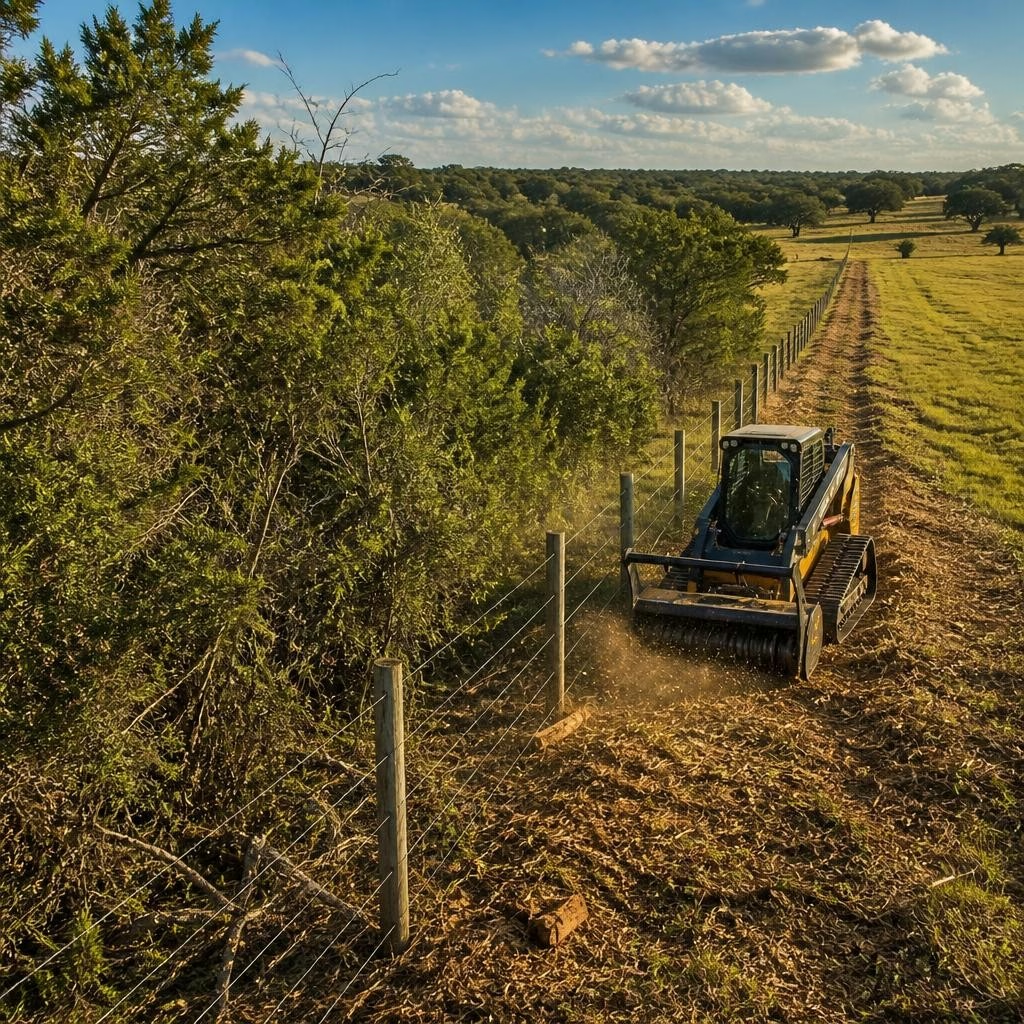
Why fence line clearing matters
Clearing fence lines goes beyond aesthetics: it protects fence materials, improves access for maintenance, reduces wildfire risk, and restores clear property boundaries. Overgrown brush, cedar, and mesquite can push on wires and posts, hide damage until it becomes severe, and make routine inspections or repairs difficult. For ranchers and rural homeowners in the Texas Hill Country, a properly cleared fence line helps maintain livestock containment, simplifies fence installation or replacement, and reduces long-term repair costs.
Initial assessment and planning
A professional fence line clearing begins with a site assessment that maps the fence route, identifies access points, notes the density and species of vegetation (for example cedar or mesquite), and flags hazards such as downed trees, rock outcrops, or sensitive drainage areas. Planning also considers property lines, gate locations, and any nearby utilities. This assessment determines whether heavy machinery, forestry mulching, hand crews, or a combination of methods will be safest and most effective.
Common clearing methods used
There are several practical approaches to opening fence lines: mechanical mulching (forestry mulching) grinds brush and small trees into nutrient-rich material that stays on site; selective hand-cutting and stump treatment preserve desirable trees while removing problematic growth; chipping recycles branches into usable mulch; and heavy equipment can remove large trees or stumps when needed. Texas Ranch Construction provides forestry mulching, brush clearing, cedar clearing, mesquite clearing, and chipping services that can be combined according to site needs.
Managing cedar- and mesquite-heavy areas
Cedar and mesquite are common in the Hill Country and each presents distinct challenges. Cedar often forms dense stands that reduce pasture productivity and can be efficiently treated with mulching to return organic matter to the soil. Mesquite can have deep roots and produce resprouts if not properly treated; selective cutting combined with stump management or follow-up treatments reduces regrowth. Choosing the appropriate method depends on density, desired future land use, and whether you want to preserve native grasses and trees.
Protecting fences and soil during clearing
When clearing adjacent to existing fences, crews take steps to prevent accidental damage: working from the correct side of the line, stabilizing equipment, and protecting posts and wires with temporary supports if heavy machinery is required. Soil protection and erosion control are also important—especially on slopes or near waterways. Maintaining topsoil, avoiding unnecessary grading, and leaving a mulch cover help reduce erosion and support native vegetation recovery after clearing.
Timing, permits, and safety considerations
Schedule clearing to avoid nesting seasons for protected birds and to minimize erosion risk during wet periods. Confirm any local permitting requirements or waterway setbacks before beginning work. Safety practices—such as wearing protective gear, marking utilities, and using trained operators for machinery—are essential. For storm-damaged lines or immediate fire-risk reduction, prioritize rapid, targeted clearing and consult professionals experienced in safe, compliant removal.
Maintenance and long-term care
A single clearing often isn’t enough to keep fence lines open indefinitely. Plan periodic maintenance—typically yearly to every few years depending on regrowth rates—to prevent re-encroachment. Combining an initial heavy cut with follow-up spot treatments, mulching, or chipping reduces labor over time and preserves fence integrity. Proper maintenance also makes future inspections and repairs faster and less costly.
How Texas Ranch Construction can help
Texas Ranch Construction offers fence line clearing and related services across Kerrville and the Texas Hill Country, including cedar clearing, mesquite clearing, forestry mulching, brush removal, and chipping. Our crews assess each property to recommend the safest, most effective approach for new or existing fences while protecting soil and nearby vegetation. For project inquiries or to schedule an assessment, contact Texas Ranch Construction directly at (830) 431-8952 or visit https://www.texasranchconstruction.com.
Article by
Texas Ranch Construction
Texas Ranch Construction is your premier choice for expert land clearing services in Kerrville and the Texas Hill Country. Whether you need land clearing, cedar mulching, forestry mulching, brush removal, rock milling & rock crushing, or pond and lake construction, we’ve got you covered! With over 20 years of experience, we have established ourselves as a trusted leader in the industry. Our commitment to delivering top-quality results has made us the best choice for clients in Kerrville, Fredericksburg, Comfort, Sisterdale, Stonewall, Center Point, Harper, Llano, Boerne, Medina, Bandera, and Johnson City.