Designing a Ranch Pond in the Texas Hill Country: Depth, Location, and Soil Tips for Reliable Water
Practical, step‑by‑step guidance for landowners in the Texas Hill Country on choosing a pond site, evaluating soils and clay content, planning depths to endure drought, and avoiding common design mistakes.

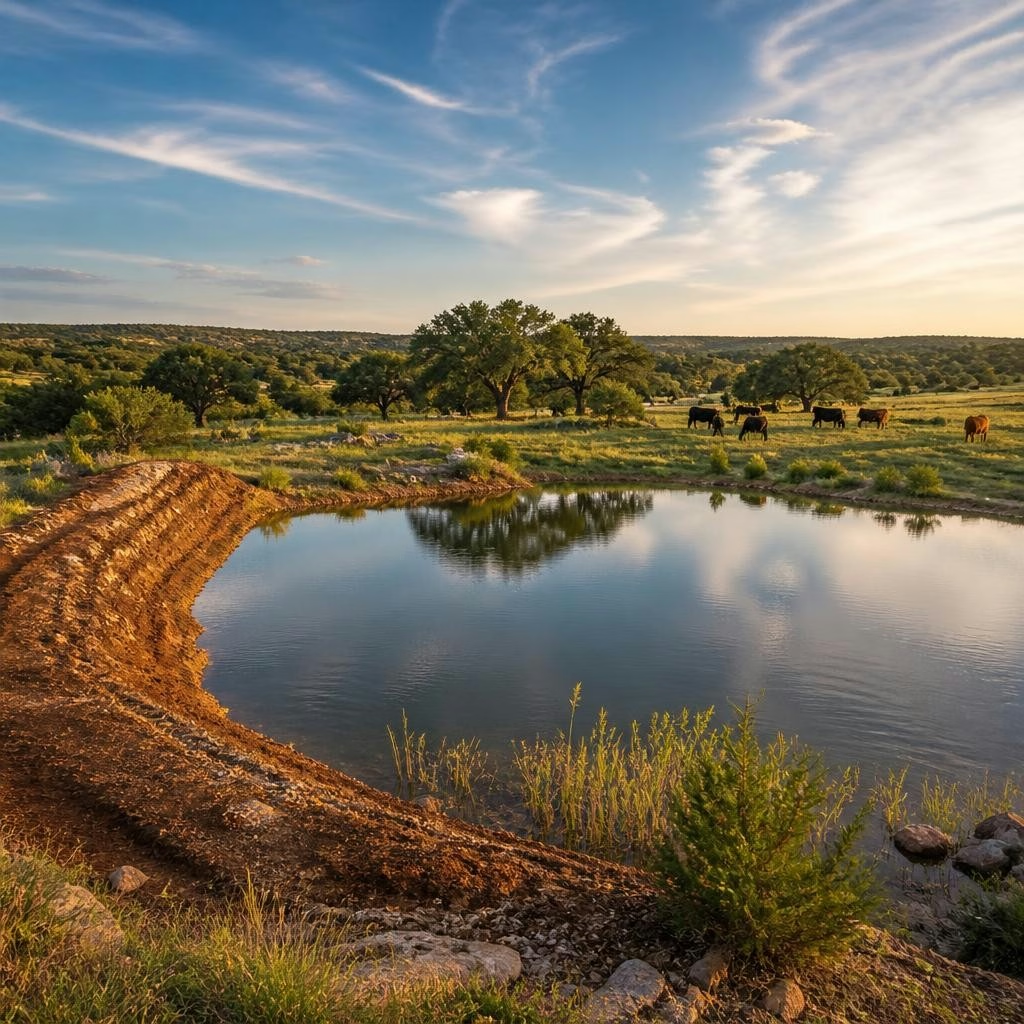
Why careful pond design matters in the Hill Country
The Texas Hill Country presents unique opportunities and challenges for ranch ponds: variable rainfall, limestone outcrops, and thin topsoils can all affect how well a pond holds water and serves livestock, wildlife, or recreational uses. Thoughtful siting, soil evaluation, and shaping are essential to create a reliable water source that minimizes maintenance and protects the surrounding landscape. Texas Ranch Construction brings more than 20 years of regional experience helping landowners plan ponds that work with local conditions.
Choose the right location: watershed, slope, and access
Start by identifying the natural watershed for your property — a pond must capture runoff from a sufficient upstream area to fill reliably. Favor sites near natural drainages with gentler slopes where fill and excavation are practical. Avoid placing a pond on steep, highly dissected terrain or isolated low spots that receive little runoff. Consider access for equipment, future maintenance, and livestock handling; proximity to existing roads or field gates reduces long‑term costs and disturbance.
How to evaluate soil and clay content on your site
Soil composition is critical: clay‑rich soils hold water much better than coarse, highly fractured limestone or permeable gravels. Useful on‑site checks include digging a test pit to observe layers, using a jar test to see how particles settle, and a simple hand‑feel test to detect sticky, plastic clay. For planning purposes, these quick methods indicate whether in‑place soils may be suitable or whether lining, compaction, or engineered approaches will be needed. When in doubt, arrange a professional soil or geotechnical evaluation before final design.
Planning pond depth without guesswork
Depth planning should balance water retention, aquatic habitat, and construction practicality. A reliable pond generally includes a deeper permanent pool zone plus shallower littoral margins for vegetation and wildlife. Design depths should account for local drought patterns and expected evaporation, but exact depths must be set after reviewing watershed yield, soil permeability, and intended uses. Work with an experienced contractor to translate those site factors into a depth profile that will sustain water through dry spells while supporting your livestock or fishing goals.
Dam, spillway and shoreline design essentials
Safe, long‑lasting ponds depend on properly designed embankments and overflow controls. Earthen dams and embankments require appropriate compaction, stable side slopes, and a protected spillway that directs overflow away from the dam face. Shoreline shaping should avoid steep dropoffs and provide gradual benches for emergent vegetation and erosion control. These elements reduce the risk of washouts and make maintenance easier; Texas Ranch Construction lists lake and pond construction, excavation, and earthen dam building among the services they provide for Hill Country properties.
Vegetation, erosion control, and managing runoff
Maintaining vegetation on the watershed and shorelines helps slow runoff, filter sediment, and stabilize banks. Where clearing is necessary, consider low‑impact methods such as forestry mulching and cedar mulching to retain organic material and reduce erosion. Rock milling or rock crushing can produce material for improving access roads and stabilizing shorelines without hauling in external aggregate. Thoughtful placement of fences and cattle crossings also prevents excessive shoreline trampling and preserves water quality.
Common Hill Country pond mistakes to avoid
Several recurring errors lead to unhappy pond projects: siting a pond over fractured bedrock or in an area with insufficient watershed yield; neglecting to plan an adequate spillway; removing too much upstream vegetation and causing erosion; and failing to test soils before construction. Avoid these pitfalls by taking a site‑based approach: evaluate drainage, test soils, design a proper embankment and spillway, and plan for access and ongoing vegetation management.
Get practical help from local pond builders
Designing and building a dependable ranch pond in the Texas Hill Country is a technical process best handled by experienced local contractors. Texas Ranch Construction offers pond and lake construction, excavation and grading, earthen dam construction, rock milling and crushing, and forestry mulching to prepare sites and shape durable water features tailored to Hill Country conditions. For project consultations or to discuss a site visit, contact Texas Ranch Construction directly at (830) 431-8952 or visit https://www.texasranchconstruction.com to learn more and request an estimate.
Article by
Texas Ranch Construction
Texas Ranch Construction is your premier choice for expert land clearing services in Kerrville and the Texas Hill Country. Whether you need land clearing, cedar mulching, forestry mulching, brush removal, rock milling & rock crushing, or pond and lake construction, we’ve got you covered! With over 20 years of experience, we have established ourselves as a trusted leader in the industry. Our commitment to delivering top-quality results has made us the best choice for clients in Kerrville, Fredericksburg, Comfort, Sisterdale, Stonewall, Center Point, Harper, Llano, Boerne, Medina, Bandera, and Johnson City.