Building Low‑Maintenance Access Roads to Tanks, Stands, and Back Pastures in the Texas Hill Country
Practical guidance for planning, constructing, and maintaining simple, durable ranch and forest access roads in rocky Hill Country terrain using smart routing, drainage, and rock-processing techniques.

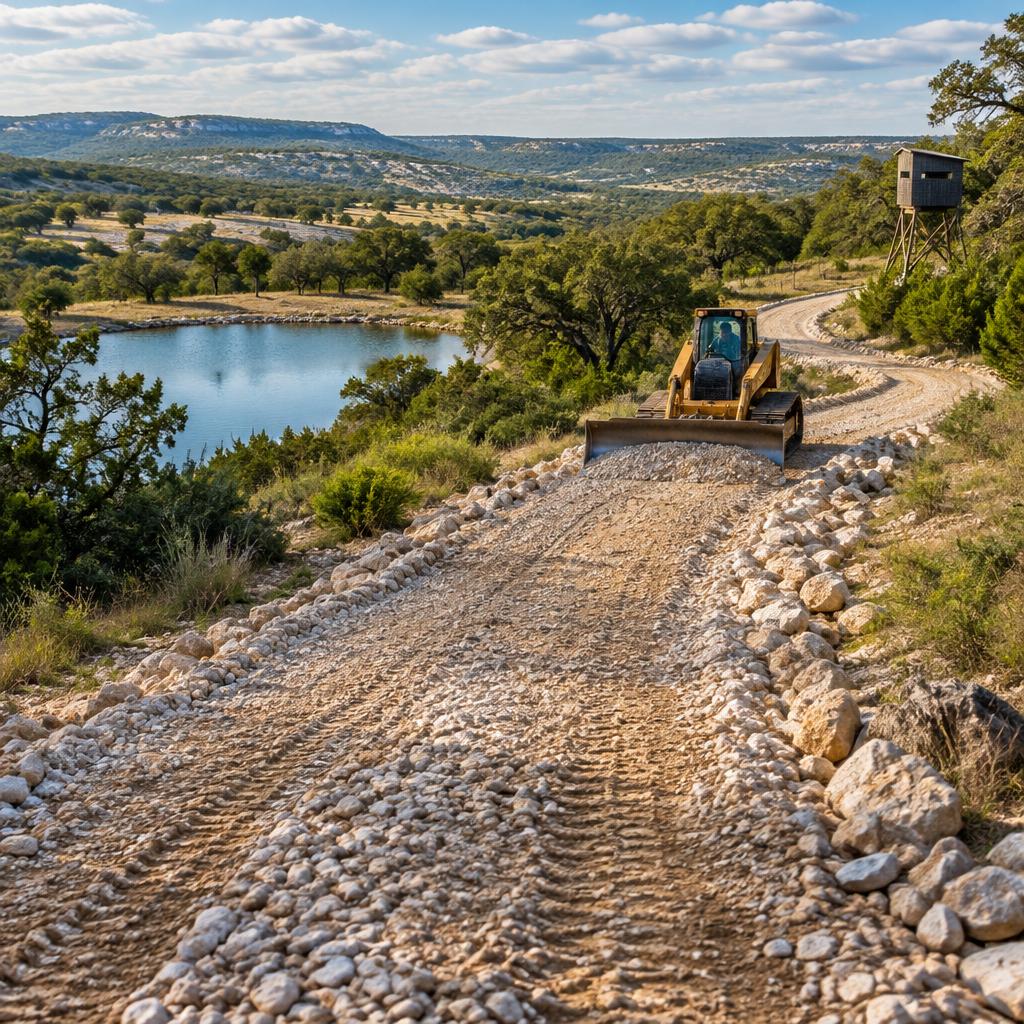
Why low‑maintenance roads matter in the Texas Hill Country
The Hill Country presents a mix of limestone outcroppings, cedar and mesquite, variable soils, and steep draws that make road construction a challenge. Well-designed access roads reduce long‑term maintenance, protect sensitive areas, and make essential points—ponds, hunting stands, and back pastures—easier and safer to reach. For ranches and recreational properties, a low‑maintenance road network minimizes erosion, lowers vehicle wear, and preserves water access and grazing areas.
Start with careful planning and smart routing
Good roads begin on paper. Walk or survey prospective routes with an eye for natural grade lines, rock benches, and ridgelines. Favor alignments that follow the land’s natural contours to reduce cuts and fills, and avoid wet draws and seasonal drainages where possible. Locate turning and pullout areas near tanks and stands so equipment and trailers can access them without repeated tight turns. Minimize tree and root removal where safety and function allow—this shortens construction time and reduces disturbance to native vegetation.
Right‑sized grading and surface layout
Keep the road footprint appropriate for the equipment and traffic it will carry: narrow access for ATVs differs from roads intended for pickups or trailers. Establish a consistent running surface and avoid long, abrupt climbs or steep, unsupported slopes that accelerate erosion. Where cutting or filling is required, compact fills in lifts and dress slopes to shed water. Design short, level or gently crowned sections at gates, water access points, and stand locations to improve safety and reduce wear on equipment.
Use rock milling and rock crushing to create stable surfaces
Limestone and surface rock are common in the Hill Country and can be turned from obstacles into durable surfacing material. Rock milling and rock crushing break down surface rock into aggregate that compacts into a stable driving surface, reducing the need to import material. These processes also smooth rough benches and improve traction. Texas Ranch Construction offers rock milling and rock crushing services that can convert native limestone into a foundation for long‑lasting ranch roads, reducing haul costs and integrating local material into the road profile.
Design practical drainage to protect the road
Drainage is the single most important factor in low‑maintenance road longevity. Use grade breaks, small cross drains, and rolling dips to move water off the running surface before it gains volume. Where water must cross the route, install durable culverts or armored crossings and maintain clear inlets and outlets so flow is not obstructed. Avoid building roads along the bottom of draws; if you must cross a drainage, create a firm, well‑drained approach on both sides and ensure water has a defined path away from the road. Regularly inspect drainage features after storms and clear debris promptly.
Protect slopes and control vegetation
Controlling vegetation and stabilizing exposed soil reduces erosion and wildfire fuel. Forestry mulching and cedar mulching remove invasive cedar and brush while returning organic material to the soil, which can help reseed native grasses alongside roads. Use chipping services and brush clearing to keep fence lines and roadside strips tidy and accessible. When practical, encourage native grasses to establish on shoulder areas; this provides erosion control with minimal ongoing maintenance. Texas Ranch Construction provides mulching, brush clearing, and chipping services to prepare and protect road corridors.
Maintenance, staging, and professional support
Plan for periodic inspections and light maintenance rather than emergency repairs. Re‑grade low spots, clear culvert inlets, replace compacted aggregate where needed, and remove encroaching brush before it narrows the corridor. For larger work—rock crushing, road rebuilding after major storms, or building new forest roads—consult experienced contractors familiar with Hill Country conditions. Texas Ranch Construction offers forest road construction, rock crushing, rock grinding, and related services across the Texas Hill Country, including Kerrville, Fredericksburg, Boerne, Llano and surrounding communities. For project planning or an on‑site assessment, contact Texas Ranch Construction directly at (830) 431-8952 or visit https://www.texasranchconstruction.com.
Article by
Texas Ranch Construction
Texas Ranch Construction is your premier choice for expert land clearing services in Kerrville and the Texas Hill Country. Whether you need land clearing, cedar mulching, forestry mulching, brush removal, rock milling & rock crushing, or pond and lake construction, we’ve got you covered! With over 20 years of experience, we have established ourselves as a trusted leader in the industry. Our commitment to delivering top-quality results has made us the best choice for clients in Kerrville, Fredericksburg, Comfort, Sisterdale, Stonewall, Center Point, Harper, Llano, Boerne, Medina, Bandera, and Johnson City.